Mindfulness isn’t just a wellness trend or a meditation app feature—it’s a way of tuning into the moment you’re living right now. It’s about paying attention, kindly and curiously, to your thoughts, your surroundings, and the rhythm of life unfolding around you.
And in a beautifully understated way, the ancient Japanese form of haiku offers the same invitation.
📝 What Is a Haiku?
A Tiny Poem with Deep Roots
A haiku is just three lines long, but don’t let its size fool you. These poems are rooted in centuries-old Japanese tradition and often capture a passing moment in nature—something brief yet profound.
Why Less Is More
A haiku doesn’t explain. It suggests. With only a handful of words, it opens a doorway into mood, image, and feeling. It leaves space—for stillness, for wondering, for you.
Where Mindfulness Meets Haiku
Be Here Now
To write a haiku, you first have to stop. Look. Listen. Notice. That simple act of paying close attention—to a raindrop, a crow’s call, a shaft of morning light—is already a mindfulness practice.
No Judgment, Just Presence
A haiku isn’t trying to impress. It doesn’t argue or explain. It simply reflects what is. That same spirit lies at the heart of mindfulness: observing without fixing, labeling, or chasing.
Nature as Teacher
Most haiku draw their power from the natural world: a falling leaf, the sound of wind, the feel of snow underfoot. Nature grounds us in the present. Mindfulness does, too.
Haiku in Action: Poetry as Mini-Meditation
Example A (classic style):
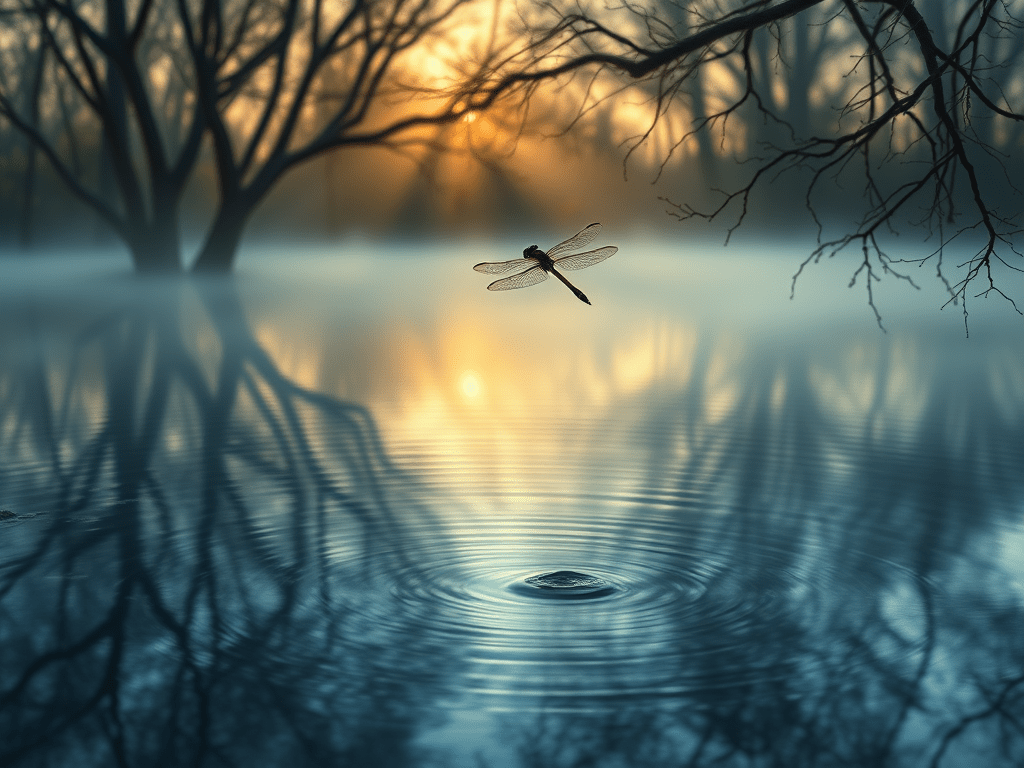
Silver pond at dawn
Dragonfly’s silent shadow
Ripples of sunrise
A moment unfolds gently—stillness, motion, light. Each image invites quiet reflection.
Example B (original):
Rain’s gentle whisper
Umbrellas bloom on sidewalks
Footsteps pause—breath
A simple scene becomes something more. Maybe you’ve lived this moment, or something like it.
Reading—or writing—haiku like these slows your thoughts. You start noticing again. Feeling. Being.
Try It: A Haiku Practice for You
Here’s a little exercise—no pressure, no perfection needed:
- Pause. For just 2–3 minutes, observe something small. A breeze, a rustle, a glimmer of light.
- Write. Turn that moment into a haiku.
- Reflect. How did it feel to slow down and notice? What did the moment reveal?
Why It Matters
Haiku offers more than art—it offers awareness. It reminds us that the quiet, ordinary moments are not empty—they’re full. They just ask us to look, to listen, to feel.
So give it a try. In these tiny poems, you might find spaciousness, stillness, even joy.
Want to share your haiku—or your experience writing one?
Drop it in the comments below. Let’s build a little haiku circle here—one moment, one poem, one breath at a time.

 Essays, Art and Plays by Dan
Leave a comment