On December 24, 1968, astronaut William Anders took a photograph that changed how humanity views itself and its place in the universe. This iconic image, known as “Earthrise,” was captured during the Apollo 8 mission, the first crewed journey to orbit the Moon.
Against the stark, lifeless lunar surface, Earth appeared as a vibrant, fragile blue and white marble, suspended in the inky void of space. This simple yet profound photograph has become an enduring reminder of our planet’s delicate beauty and interconnectedness.
The impact of “Earthrise” on public perception was immediate and profound. Before this photograph, the vastness of space was largely abstract, “Earthrise” transformed the abstract into the tangible, providing a visual anchor that allowed people to grasp the reality of space and our planet’s place within it.
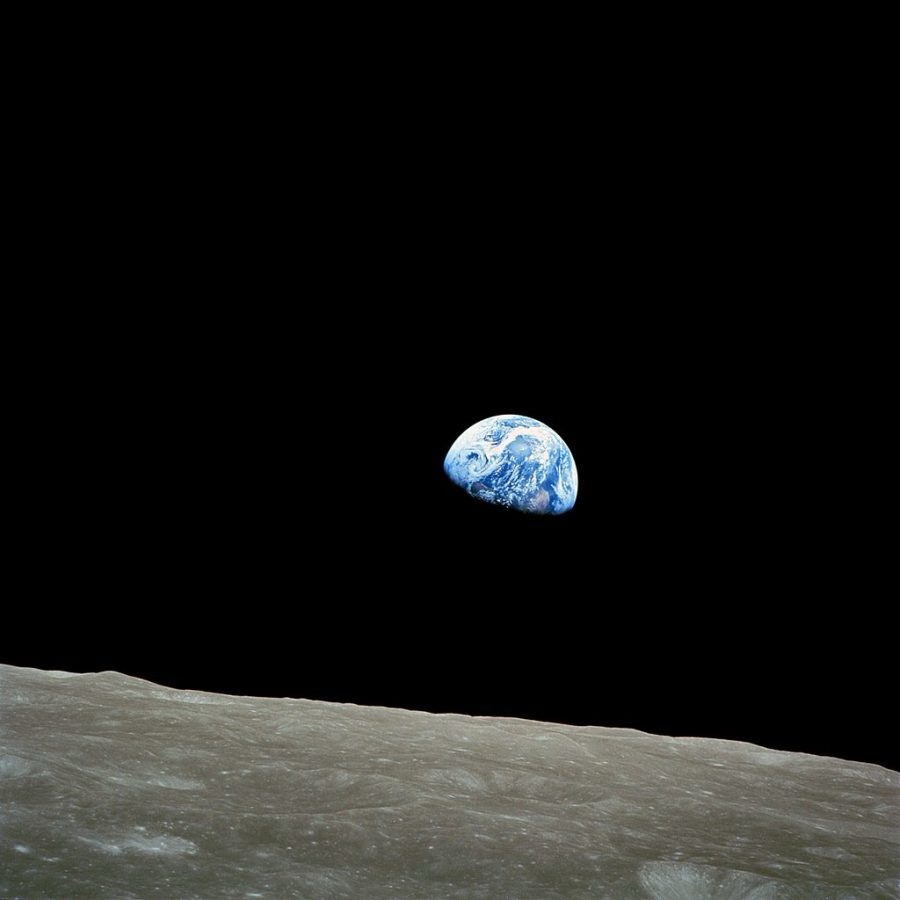
As Anders later reflected, “We came all this way to explore the Moon, and the most important thing is that we discovered the Earth.”
The image provided a powerful visual argument for the interconnectedness of all life on Earth and underscored the notion that borders and divisions are insignificant from a cosmic perspective.
The contrast between the barren, gray lunar surface and the vibrant, life-sustaining colors of Earth evokes a sense of awe and humility. Our planet is a fragile oasis of life in an otherwise inhospitable universe.
The enduring legacy of “Earthrise” is evident in its continued influence on art, literature, and environmental advocacy. The image has been featured in countless exhibitions, publications, and documentaries, each time renewing its message of unity and conservation.
“Earthrise” is more than just a photograph; it is a call to cherish our shared home. Its impact on the public perception of Earth, its influence on the environmental movement, and its ability to evoke a sense of unity make it one of the most significant images in human history.



 Essays, Art and Plays by Dan