In the golden glow of dawn, a scarecrow stands sentinel over a tranquil field, its silhouette stark against the blush of the sky. The soft rustling of cornstalks dances around it, whispering secrets to the morning breeze. Dressed in tattered clothes, a wide-brimmed hat perched precariously atop its straw-stuffed head, it exudes a quiet vigilance. The air is thick with the earthy scent of soil and the sweet aroma of ripening crops, creating a tapestry of sensory delights. This figure, humble and steadfast, is more than a mere guardian; it is a thread in the intricate weave of human culture and history.
Scarecrows have guarded fields for millennia, their origins tracing back to ancient civilizations. In ancient Egypt, farmers along the Nile used wooden frames draped with nets to protect their grain fields from flocks of quail. Similarly, in ancient Greece, the figure of Priapus, a minor god of fertility, stood in vineyards and gardens, his grotesque form believed to scare away birds and ensure a bountiful harvest. These early incarnations of the scarecrow were not merely functional; they were imbued with spiritual significance, merging practicality with the sacred.
As the practice of agriculture spread, so too did the scarecrow, evolving to reflect the unique customs and beliefs of various cultures. In Japan, the kakashi stands as a straw-stuffed sentinel, often dressed in traditional farmers’ attire, complete with a kasa hat. In addition to scaring away birds, these figures were believed to possess a spirit, a kami, protecting the fields from pests and misfortune. Similarly, in European folklore, scarecrows were often seen as protective spirits. In some regions, they were even given names and treated with respect, embodying the soul of the land they guarded.
The materials and methods used to craft scarecrows are as diverse as the cultures that create them. In rural America, old clothes and straw suffice to conjure a rustic guardian, its simplicity reflecting the practical ingenuity of the farmers. In contrast, Indian scarecrows, often made from bright, colorful fabrics and bamboo, mirror the vibrancy of the culture. These figures, with their exaggerated features and lively appearance, are a testament to the creativity and resourcefulness of the people.
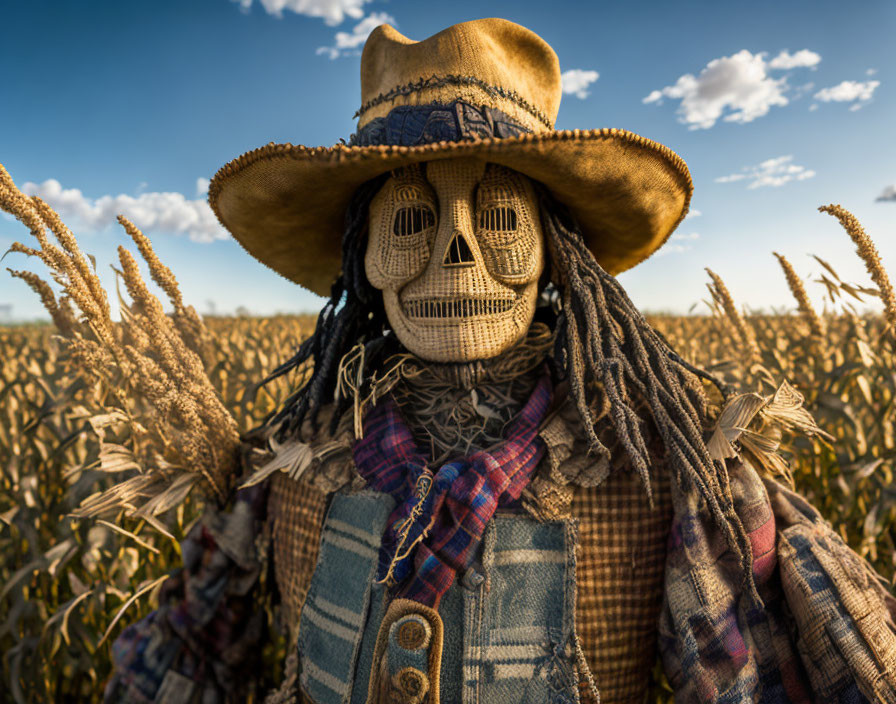
In Korea, scarecrows known as “geom-sang” are crafted with care, their lifelike faces painted with expressions meant to deter birds. These figures often stand near rice paddies, their presence a silent testament to the farmer’s hope for a fruitful harvest. In Nigeria, scarecrows made from palm fronds and old clothes are strategically placed among yam fields, their purpose both to protect and to invoke the favor of the gods.
Despite the variations in appearance and construction, scarecrows around the world share a common thread: they are symbols of the profound connection between humanity and the land. They stand as guardians, not only of crops but of cultural heritage, embodying the collective wisdom and traditions of the communities they serve.


 Essays, Art and Plays by Dan
Leave a comment